A dark lava path in Santorini, a flooded cave in Mani, fossilised palms near Kastoria: Greece’s landscapes reveal histories that began long before its ancient temples. Geotourism in Greece brings those histories into focus, connecting the places you visit with the natural processes that shaped them.
Along the way, geology meets archaeology, mining heritage and local stories. A familiar island can become more interesting when you understand its rocks; a less familiar mainland stop can give a journey a different direction.
What is geotourism
In this guide, geotourism means exploring geological landscapes and learning how they formed, while also considering their relationship with people and culture. Volcanoes, caves, fossils and thermal springs provide starting points for that exploration.
The wider approach also values conservation and local communities. UNESCO Global Geoparks connect geological heritage with education and sustainable development, offering a useful framework for understanding this kind of travel.
Who would enjoy a geology focused journey
You do not need a scientific background to enjoy these places. Curious travellers, families, photographers and returning visitors can all find something to explore. For university groups, selected sites can also support study in geology, geography, archaeology or environmental subjects, with the level of interpretation matched to the group.
Why explore Greece through its geology
This approach adds context to what you see. Obsidian connects a volcanic island with prehistoric trade, while an old mine reveals how mineral resources shaped working lives. Elsewhere, cave deposits and fossils invite questions about water, time and past environments.
It also creates room for a varied holiday. A cave visit or geological walk can sit alongside an archaeological site, a village lunch or time by the sea. The route can follow your interests without making every day a technical field excursion.
Places to explore on a geotour in Greece
The following destinations offer different ways to connect landscapes with natural history and culture. Choose a regional combination rather than treating them as a single continuous route.
Milos
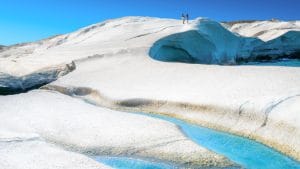
Milos’s pale cliffs, coloured rocks and mineral deposits reflect its own volcanic history. The Milos Mining Museum introduces this mineral wealth, including obsidian, the volcanic glass used to make tools in prehistoric times. The island’s geology developed at its own volcanic centre within the Hellenic Volcanic Arc.
Combine coastal landscapes with the museum’s collections for a fuller picture of how geology influenced work, trade and daily life.
Santorini and the Kameni islands
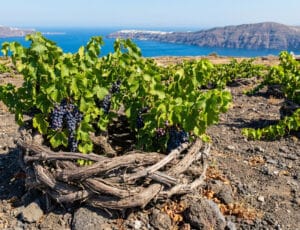
Santorini offers a striking setting in which to explore volcanic history. Its caldera records successive eruptions and collapses, while Nea Kameni and Palea Kameni formed during later volcanic activity within it. When access and conditions permit, a boat excursion to Nea Kameni brings you onto a landscape of dark lava.
At Akrotiri, volcanic deposits preserved a Bronze Age town, making an archaeological visit a natural companion to exploring the caldera. Together, the two visits connect geological change with human experience.
Edipsos in northern Evia
Edipsos brings thermal springs into a coastal town setting on Evia, Greece’s second largest island after Crete. Its bathing tradition offers another way to experience the relationship between groundwater and the landscape. A visit can combine the springs with time along the waterfront and exploration of northern Evia.
Ikaria
Ikaria combines hot springs, mountain villages and a distinctive island culture. The familiar tradition linking its name with Icarus tells of his fall into the sea nearby after flying too close to the sun. It belongs to the island’s cultural landscape alongside the physical features that geotourism explores.
Time in the villages also introduces local food and social traditions, giving the journey a broader context than a visit to the springs alone.
Diros Caves in Mani
On the western coast of the Laconian peninsula, Vlychada Cave at Diros reveals a world of water, stalactites and stalagmites beneath Mani’s rocky landscape. Its formations illustrate how water dissolves limestone and later deposits minerals within a cave. Visitor routes include water and land sections, but the available route depends on conditions.
A wider Mani itinerary can also explore Cape Tainaron, a separate place associated with ancient traditions about an entrance to the Underworld.
Meteora
At Meteora, tall pillars of sedimentary rock form the setting for monasteries built above the plain near Kalambaka. Tectonic movements, erosion and weathering helped shape the landscape, while the monasteries reveal how people adapted to it.
Six monasteries remain active today. Meteora is a UNESCO World Heritage Site and also lies within the wider Meteora Pyli UNESCO Global Geopark. These designations recognise different aspects of its heritage. Plan monastery visits around the steps and access requirements of each site.
Kastoria and the Dragon Cave
Beside Lake Orestiada, Kastoria combines a lakeside townscape with the underground chambers and lakes of the Dragon Cave. Stalactites, fossils and the cave’s relationship with water provide its natural history interest. Its dragon story adds a local legend to the experience, rather than an explanation of how the cave formed.
The petrified forest of Nostimo
Near Kastoria, Nostimo’s fossilised trees and marine finds reveal a landscape very different from the one around the village today. Fossilised palms recall the vegetation of the Miocene, around 20 million years ago. The local Museum of Paleontology and Paleobotany displays finds from this prehistoric environment; arrange the visit in advance.
Boucharia and Nochtaria
Near Mikrovalto in the Grevena Kozani UNESCO Global Geopark, erosion has shaped earth pillars known as Boucharia and Nochtaria. Some retain protective stone caps, giving them a chimney or mushroom outline; others taper without a cap. Their forms offer a clear introduction to the way different materials resist erosion at different rates.
Alistrati Cave
In the Serres region of northern Greece, Alistrati Cave contains spacious chambers and a rich variety of mineral formations. Alongside stalactites and stalagmites are eccentric formations that grow in unexpected directions. The visit brings a geological process into view: water acting on limestone over long periods, creating both cavities and delicate deposits.
Pozar near Aridaia
At Loutraki Aridaias, near Aridaia and Mount Voras, Pozar’s warm waters meet a wooded gorge. The approximately 37°C water and surrounding landscape make the springs a distinctive stop on a northern Greece journey. Depending on the itinerary, a visit can be paired with the waterfalls of nearby Edessa.
Kefalonia
Kefalonia offers a different geological story, shaped by limestone and moving water. Melissani’s cave lake and the formations of Drogarati introduce the island’s karst landscape, created as water dissolves soluble rock.
At Katavothres near Argostoli, seawater disappears underground and travels through a karst system, reappearing as brackish water near Karavomilos on the Sami side of the island. Linking these places turns separate sightseeing stops into an exploration of a connected water system.
Vagonetto Mining Park in Fokida
Vagonetto shifts the focus from natural caves to the human use of mineral resources. At the former bauxite mine, a small miners’ train takes visitors to the entrance, followed by a walking tour underground. Displays explore mining work and the machinery used there. Advance reservations are required, making this a visit to plan into the route.
Planning your geotourism journey
Begin with a region or a central interest. Milos and Santorini could form the basis of a volcanic island journey, subject to transport connections. For a mainland route, Meteora, the Kozani area and Kastoria offer rock formations, caves and fossils. Diros, meanwhile, fits naturally into a wider exploration of Mani and the Peloponnese.
The pace matters as much as the choice of stops. Allow for walking surfaces, monastery steps, cave conditions and travel between regions. Confirm the current visitor arrangements with each operator before setting the itinerary.
Explore with care: stay on designated paths, leave rocks and fossils in place, and follow instructions in caves, mines and volcanic areas. Choosing local guides, accommodation and places to eat can also help connect the journey with the communities you visit.
Explore Greece around your interests
Contact Vikings Tours to discuss a private journey combining geological landscapes with archaeology, local food and time to explore. For faculty and group leaders, our educational travel programmes provide a starting point for a journey shaped around your academic interests.
Want to know more?
- UNESCO UNESCO Global Geoparks
Geological heritage, education, local communities and sustainable development. - Smithsonian Global Volcanism Program Greece volcanoes
Milos and Santorini are separate volcanic centres in the Hellenic Volcanic Arc. - Milos Mining Museum Facilities exhibits and ground plans
Obsidian, the island’s minerals and mining heritage. - Greek National Tourism Organisation Edipsos
Thermal springs and the coastal spa town. - Greek National Tourism Organisation Ikaria
Hot springs, villages and island traditions. - Diros Caves operator The cave
Vlychada’s location, limestone formations and visitor route. - UNESCO World Heritage Centre Meteora
World Heritage inscription, monasteries and the rock landscape. - European Commission Dragon’s Cave in Kastoria Greece opened to the public
Underground lakes, chambers and the recorded dragon legend. - Visit West Macedonia Boucharia and Nochtaria of Servia
Location near Mikrovalto in the Grevena Kozani Geopark and erosional landforms. - Greek National Tourism Organisation Pozar Thermal Baths
Loutraki Aridaias, Mount Voras. - Vagonetto Visit
The Phocis Mining Park. - Visit Peloponnese Akrotainaro and the lighthouse
Underworld traditions at Cape Tainaron, a separate location from Diros. - Greek National Tourism Organisation Walking around Santorini’s volcano
Boat excursions and walking on Nea Kameni.
you might be interested to
see What to do during your Greece Vacation or check our A Taste of Greece, culinary tour.
Frequently Asked Questions About Geotourism in Greece
What is geotourism in Greece
Geotourism explores geological landscapes and the processes that shaped them, together with their connections to people and culture. In Greece, this can include volcanoes, caves, thermal springs, fossils and mining heritage.
Which Greek islands are interesting for geology
Milos and Santorini offer volcanic landscapes, while Kefalonia is especially interesting for limestone caves and underground water systems. Ikaria adds thermal springs and opportunities to explore the relationship between landscape and island life.
Do I need a background in geology
No. A well planned journey can introduce the subject through clear explanations and visits to visible features. Academic groups can choose a more detailed approach, with specialist interpretation arranged around their objectives and availability.
Can geological visits be combined with archaeology
Yes. Akrotiri on Santorini connects a Bronze Age settlement with volcanic history. On Milos, the museum’s obsidian collections show how a geological resource contributed to prehistoric toolmaking and trade.
Are these visits suitable for everyone
Access varies. Some visits involve steps, uneven ground, boats or underground passages. Discuss mobility needs and comfort in enclosed spaces before choosing sites, and confirm arrangements with each operator.
How long should a geotourism trip be
There is no fixed duration. One geological visit can enrich a broader holiday, while a dedicated journey needs time for several sites and travel between them. Choose the region, interests and pace before setting the length.
Are all the places in this guide UNESCO Global Geoparks
No. Some lie within designated geoparks, including the Meteora Pyli, Grevena Kozani and Kefalonia Ithaca areas. Others are individual geological attractions. A UNESCO Global Geopark designation is distinct from UNESCO World Heritage status.
Can we help plan an educational geology journey
Yes. Vikings Tours develops customised educational travel programmes around group interests and course objectives. Geological visits can be discussed as part of that planning, with the route and specialist contributions subject to availability.